
What Impostor Syndrome Cannot Explain.

Last week we sat with the Always On Problem, the cost of leading in a glass office. This week is what happens to your confidence when you have been leading in that glass office for long enough that something begins to shift inside you, and you begin losing confidence.
When that happens, we often slap a label on it. Most often, we call it: impostor syndrome. It is real, and some women at altitude live it. But it is not always the right description for what we are feeling. And even when the label fits, it often fails to describe the full picture. There is a related experience that impostor syndrome does not name, and that experience is often what we are actually carrying.
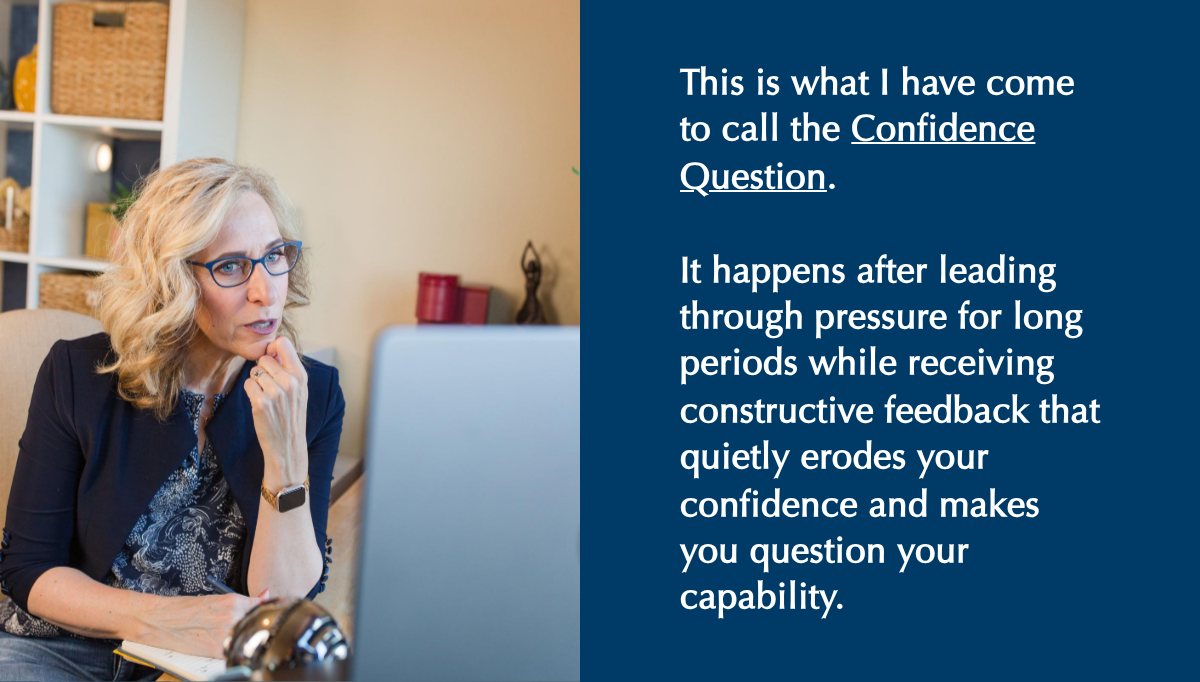
You know the scene, a woman of altitude receives feedback that is thoughtful and well-meaning. It is also almost always about where she could sharpen or soften, and rarely about where she is already leading well. Over time, the ratio quietly tips toward the critical. And the people around her assume she does not need the balance that affirming feedback provides.
After all, she has made it to the top. She is the one they are looking to for inspiration and confidence.
It rarely occurs to anyone that the person carrying the confidence for the room might be running low on her own.
I know this because I lived it.
The season leading into my C-suite role brought more feedback than I knew how to hold. It came from every direction. It was thoughtful. It came from people I respected. Some of it wanted me to speak up more. Some of it wanted me to hold back. Some of it wanted more directness. Some of it wanted more softening.
The perspectives contradicted each other, and I could not make sense of any of them because there was no coherent picture to make sense of.
I stopped trusting my own instincts because I could not tell which instincts were the right ones anymore, and I tried to apply every piece of feedback I received, even when they were contradictory. It tied me in knots.
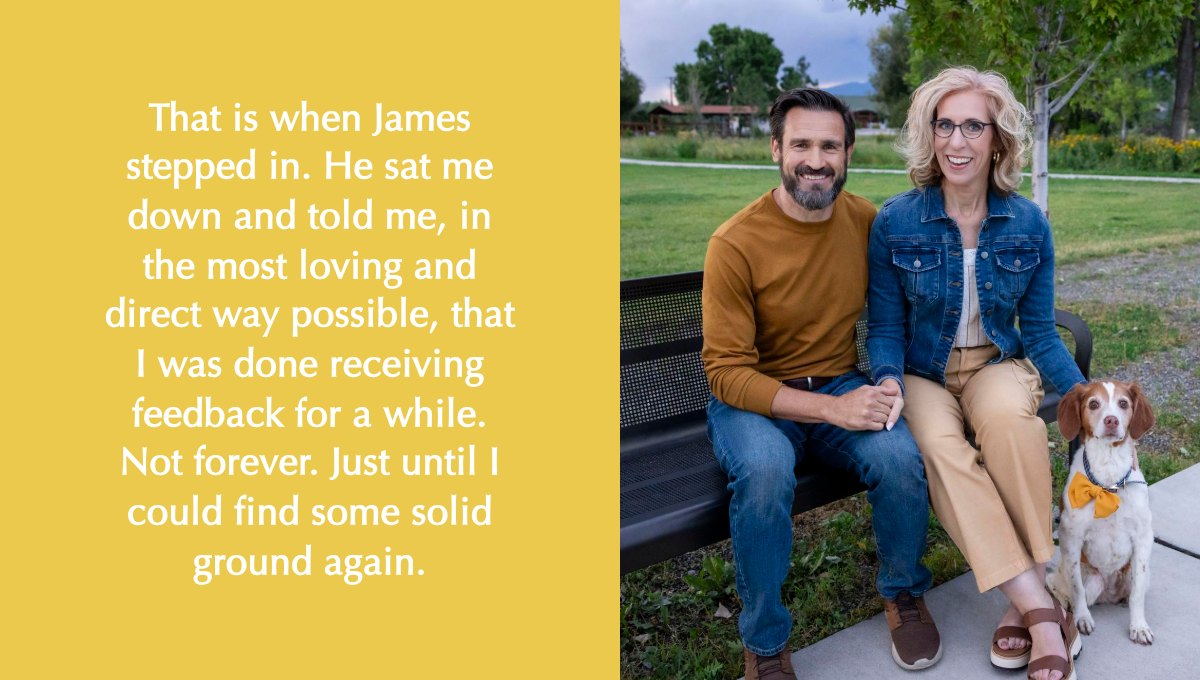
What mattered was not that James understood the specific work I was leading. What mattered was that he cared, he was paying attention, and he named what he saw. Once he said it out loud, I could see it too. Once I could see it, I could stop it.
It does not always take a peer at your altitude to name what the Confidence Question is doing to you. Sometimes it just takes someone who supports you and is paying attention to help you break the pattern.
This is not about stopping feedback. Feedback is valuable, and most of what we receive is worth something.
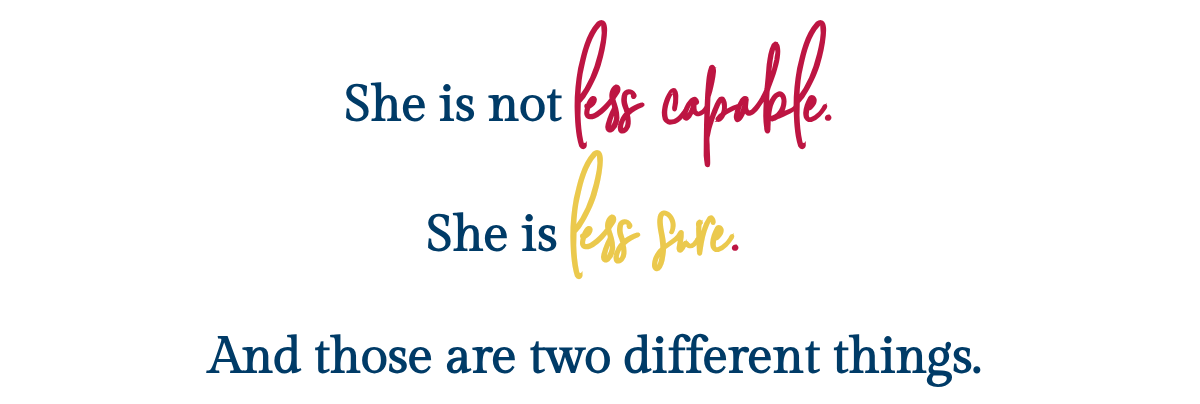
Here is what I believe is happening quietly behind the scenes. Let's return to the woman in our example. The tipped ratio of constructive to affirming feedback has eroded her internal discernment, and with it, her ability to sort the feedback worth acting on from the feedback worth acknowledging and setting aside. She may be tempted to adopt everything wholesale. like I did, because she has lost trust in her own judgment about what deserves attention. The work is to restore the discernment that the erosion took from her. This is not a failure of judgment. It is what happens to any of us who have carried too much for too long without balance.
🔜The Impact Conundrum closes the series next week.

🤏TINY TWEEK Challenge
The next time you receive constructive feedback, take a break before you act on it. Evaluate whether the feedback deserves reflection, action, or acknowledgment without adoption. And while you are sorting it, name for yourself one thing you are already doing well in that same area. That is the tweak.
