
My dad asked me one question. I couldn't answer it.

Last week I told you about my dad and the moment he looked me in the eye and told me he cared more about my character than my feelings.
But I never told you what caused me to seek his feedback in the first place.
Let me back up.
I had just received the results of a 360 evaluation. You know the kind — the one where the people above you, beside you, and below you in the organization are all asked to weigh in. Multiple choice questions. Comment boxes. The works.
And I was furious.
I thought the feedback was unfair. I thought people had misread me, misjudged me, gotten it wrong. I was hurt, defensive, and sharing my feelings loudly to my dad while building my case for why none of it was accurate.
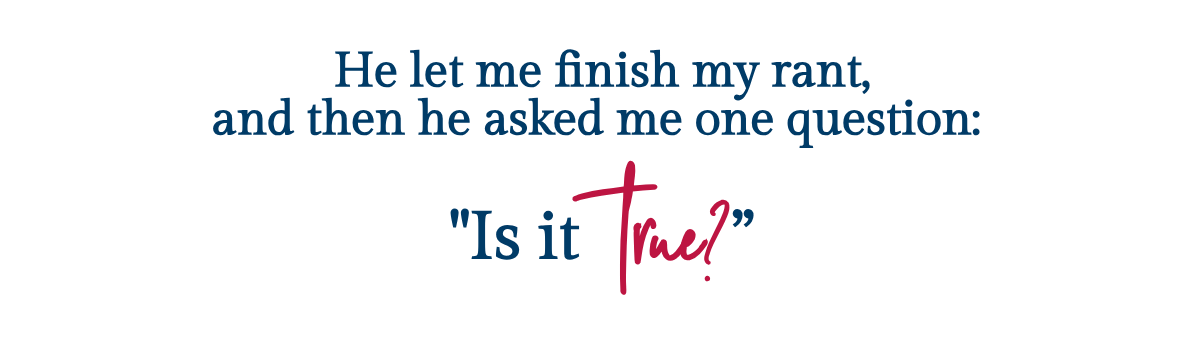
Not “How does it make you feel?” Not “That sounds really hard.” Just: Is it true?
I should have been able to answer that immediately, and I could from a place of defensiveness but not from a place of actual perspective. Because I didn’t really know. I had been so busy reacting that I hadn’t stopped to ask myself whether any of it was valid.
That question stopped me cold.
It taught me something I’ve carried ever since: the only way to know whether feedback is true is to develop enough self-awareness to evaluate it honestly. And developing that level of self-awareness requires you to be collecting feedback regularly, not just when a formal evaluation lands in your inbox.
That was a big day of learning. My dad gave me two lessons that have never left me.
(1) The first: Is it true?
(2) The second: My character should always matter more than my feelings.

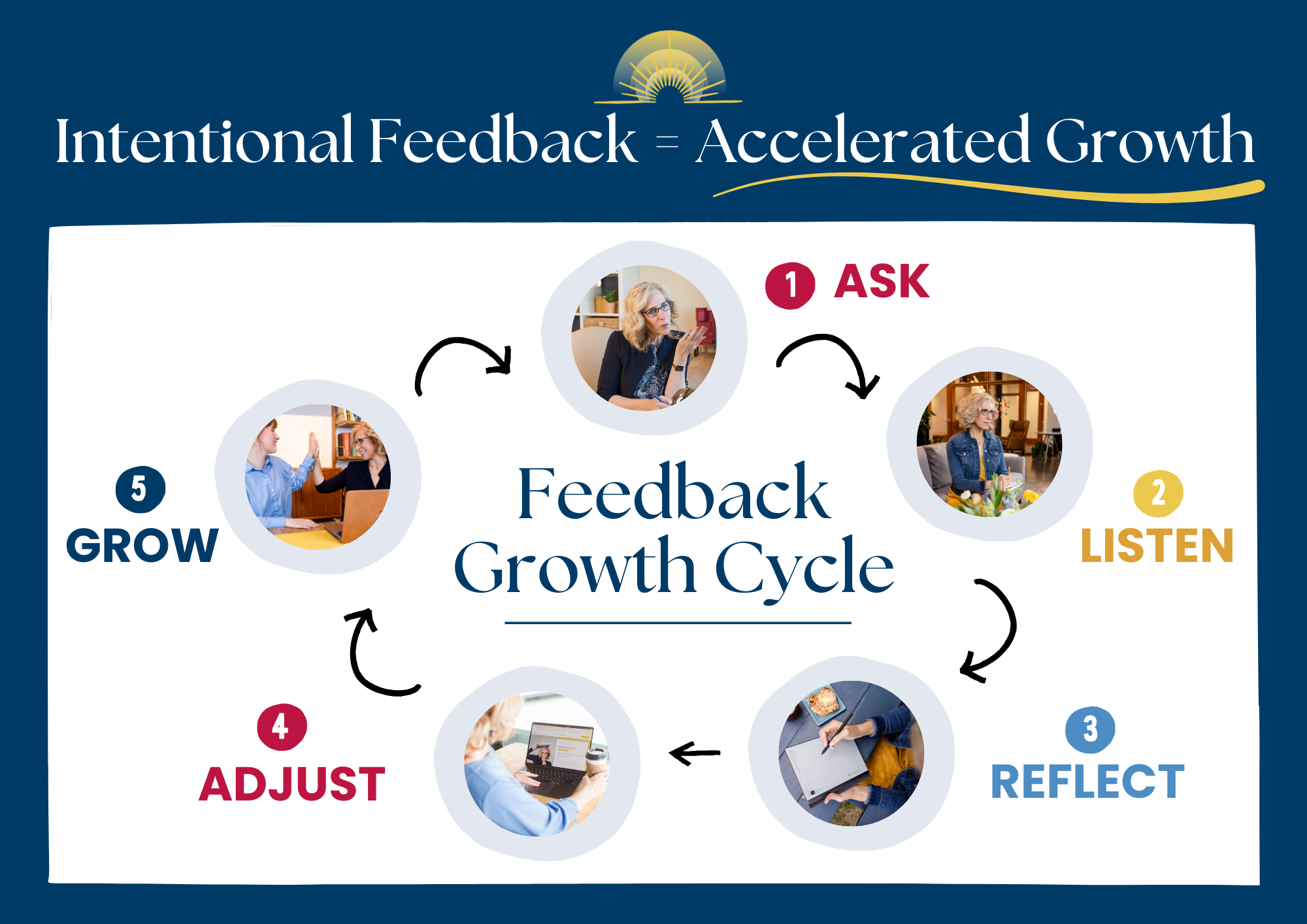
Instead, I adopted a posture of intentional feedback collection — not the kind where you ask everyone around you what they think (that way lies madness, and you will never please everyone). The kind where you get specific.
Before an important meeting, I might tell someone I trust: “I’d love your read on how I handle the pushback today. Will you watch for that and tell me what you notice?” After a presentation, I’ll ask one person one targeted question. Not a general “how did I do?”, but a specific question about a specific area of feedback.
That kind of intentional feedback-seeking does two things. It accelerates your growth in the exact areas you’re working on. And it builds the self-awareness that makes you a better receiver of the harder feedback when it comes. Because, my friend, it always comes!
The leaders who grow fastest aren’t the most naturally talented. They’re the ones who get good at asking the right questions of the right people at the right moments, and then doing something with what they hear.
That’s not a personality trait. It’s a practice. And it’s one you can start this week.

🤏TINY TWEEK Challenge
Think about one interaction coming up in your week a meeting, a presentation, a difficult conversation.
Before it happens, identify one person who will be in the room and one specific thing you want their eyes on.
Tell them in advance: “I’m working on [X]. Would you watch for that today and share what you notice afterward?”
That’s it. One person. One ask. One piece of feedback you actually sought out.
