
How to Deal With the “F Word” at Work: Feedback

It's that time of year.
You've either just walked out of your annual performance review, you're about to have it, or you're still replaying something that was said in your last week.
I've coached leaders through this exact moment more times than I can count. And almost every time, the same thing happens. One specific piece of feedback gets stuck on repeat. The comment that stung. The criticism that felt unfair. The observation that made you question everything.
I've been there too.
Early in my career, I received feedback I was convinced was completely unjustified. I was furious. Hurt. Ready to defend myself. So I called my dad, a retired manufacturing VP and one of my most trusted advisors, fully expecting him to validate my outrage.
Instead, he asked me three words:

I snapped back, “What do you mean, 'is it true'? Of course it's not true.”
He paused and said, “Sweetheart, I care more about your character than your feelings. So I'll ask you again. Is it true?”
That question stopped me cold.
In one moment, he redirected my energy away from defending myself and toward the only thing I could actually control: my response.
Here's what I've learned since then.

It doesn't tell you who you are. It gives you information you can choose to use or ignore. One of my mentors used to say feedback is necessary, but insufficient for growth. You only grow when you receive it, process it, and apply what's useful.
And yes, we all have blind spots. Like when you're driving, they're dangerous precisely because you can't see them. Feedback helps surface what you can't see on your own.
The perspective others have of you exists whether you hear it or not. Hearing it simply gives you the option to do something about it.
That's why I still use one simple filter to this day: Is it true?
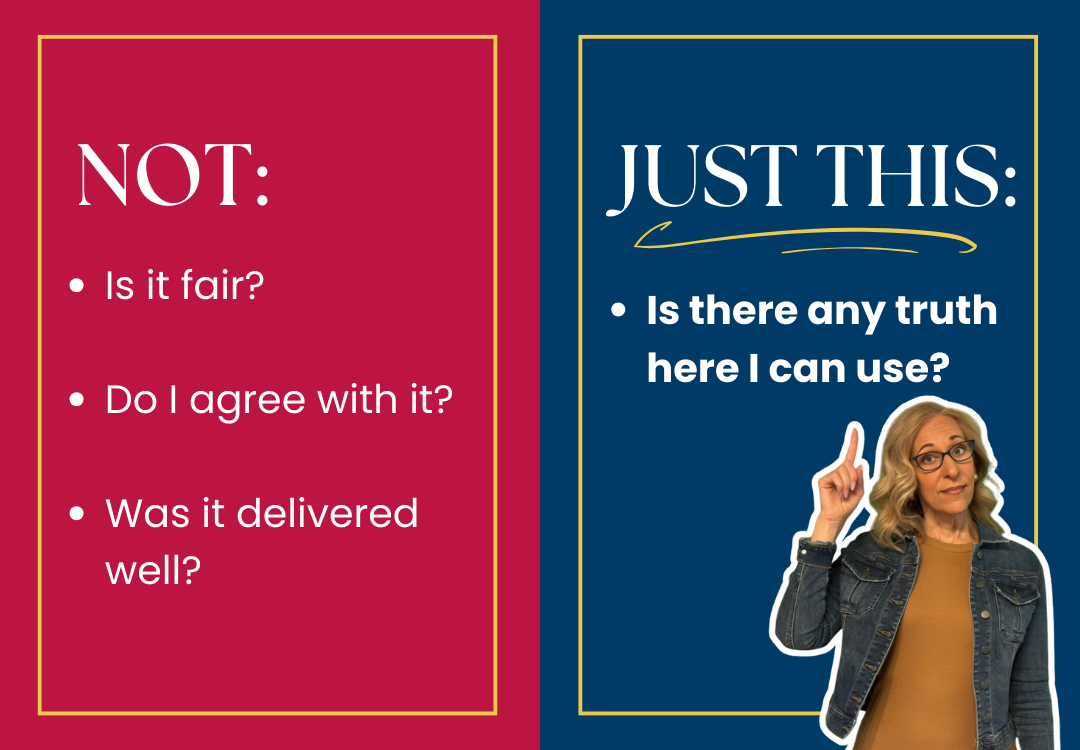
If the answer is yes, even partially, you've been given something valuable.

🤏TINY TWEEK Challenge
Think of one piece of feedback you've received recently from a manager, colleague, mentor, or even a family member. Ask yourself, “Is it true?” Identify one small adjustment you could make in the next 48 hours.
No defending. No explaining. Just decide what's useful.
