
What $52,000 Taught Me About the Wrong Room

I want to be honest about something I don’t talk about often.
Over the course of my career, I have invested $52,000 in women’s professional communities and networking programs. $15,000 in one. $17,000 in another. $10,000 twice. I went into each one with real hope and high expectations. And each time, something was missing.
The women were wonderful, smart, driven, and generous with their time. But the rooms weren’t built for the kind of work I needed them to do.
In one program, the curation wasn’t rigorous enough. The level of experience among the women varied so widely that I spent more time providing context than receiving value. In another, the women matched my experience and strategic thinking, but the structure was missing. No rules of engagement. No shared understanding of how to navigate the space. The result was a lot of surface-level connections that never deepened into a real thought partnership.
I kept hoping I would walk into a room that had all of it. Strategic depth. Curated membership. A culture of truth-telling rather than cheerleading. Women who were genuinely invested in each other’s success rather than quietly competing for the same table.
I never found that room.
Before I go further, I want to name something important. Not every room is built for the same purpose, and that's exactly as it should be.
Some rooms are built for connection, encouragement, and finding your footing. Those rooms do real, meaningful work in women's lives. This isn't about those rooms. This is about a specific kind of room: the one a woman needs when she's already established, already proven, and tired of circling the same problems without resolution. She has become the most accomplished person in most rooms she walks into.
That's not a brag. That's a problem.
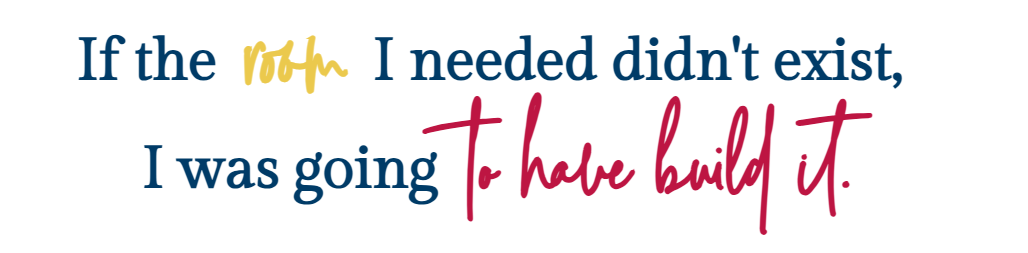
And that’s when I realized something that changed the direction of my work: 👇
The more I examined what was missing in those programs, the clearer the pattern became. Three things have to be present for a room to actually work at the level high-achieving women need it to work.
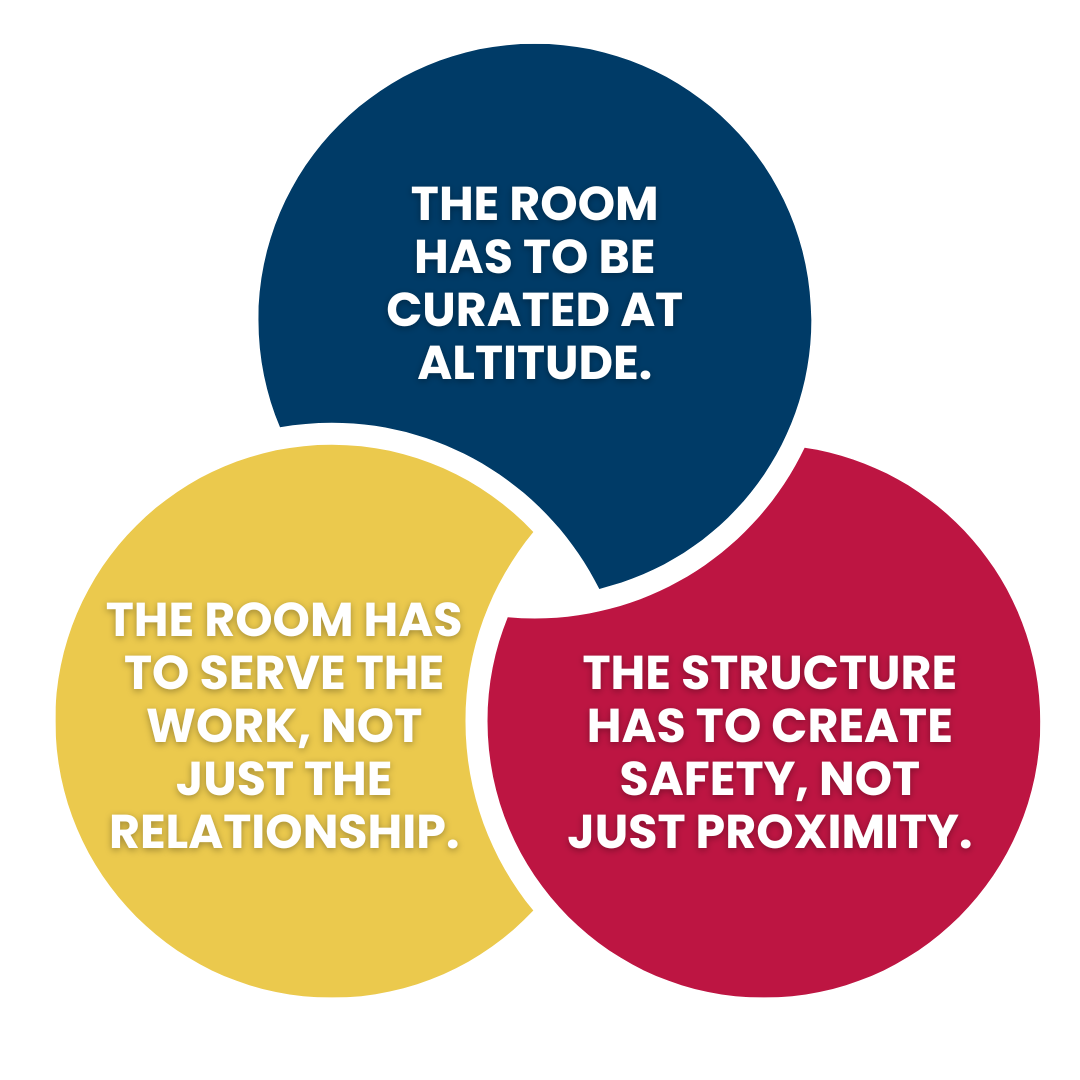
1️⃣ First, the room has to be curated at altitude. Not curated by industry or title or demographics. Curated by the level at which the women are operating and thinking. When the altitude is matched, you skip the 45 minutes of context-setting that drains most professional conversations before they get anywhere useful. You walk in and go straight to the real work.
2️⃣ Second, the structure has to create safety, not just proximity. A curated guest list is not enough. The room needs rules of engagement. It needs a shared understanding of what aggressive collaboration looks like in practice. Abundance over competition. Truth over comfort. Character plus competence. Without that architecture, even the best group of women will default to the polite, guarded version of community that doesn’t actually move anyone forward.
3️⃣ Third, the room has to serve the work, not just the relationship. The best professional communities I’ve experienced aren’t built around networking. They’re built around the thing each woman is carrying and the mutual commitment to help each other move on it. When the room is oriented around real work, the relationships deepen naturally. When it’s oriented around relationship-building alone, the work never arrives.
Growth requires breaking up. I had to break up with the idea that a room like this was already out there waiting for me. I had to break up with settling for good-enough community when what I actually needed was something built with more intention.
What I learned from those experiences isn't that the right room can't exist. It's that it can't happen by accident. It has to be architected. Curated altitude, structural safety, and a relentless orientation around real work — those three things don't just show up. Someone has to decide they matter and build accordingly. That clarity has shaped everything about how I think about professional community now, and what I refuse to accept as a substitute.

🤏TINY TWEEK Challenge
Think about the last professional room you invested in, whether that was time, money, or both.
Did it have all three: curated altitude, structural safety, and orientation around real work? If not, which piece was missing? That gap is worth noticing.
